When it comes to selecting the right washer-extractor for your business, it’s important to understand the differences between a hard- and soft-mount washer. Then consider your available space and installation requirements, utilities required to operate the washer, disinfection monitoring capabilities, machine efficiency, laundry productivity goals, programmability and ease of use.
The Difference Between a Soft-Mount Washer and Hard-Mount Washer
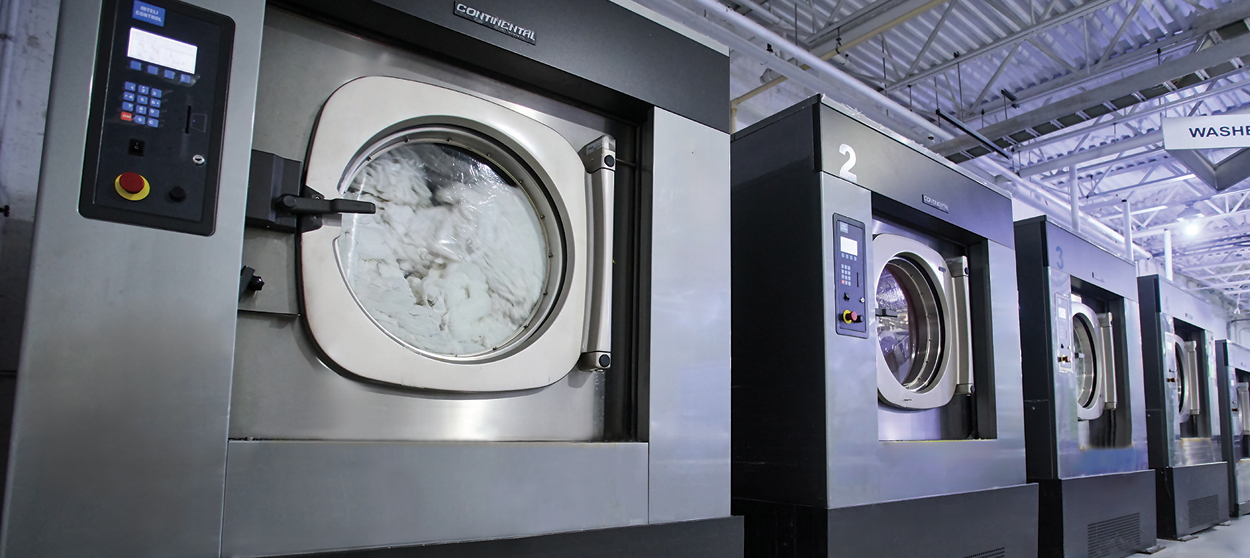
Hard-mount washers are bolted to a reinforced concrete foundation and generate sustained extract speeds of 75-250 G-force. They are a more economical option in terms of purchase price than a soft-mount washer, but do not reach extract speeds as high as a soft-mount washer. In turn, hard-mount washers remove less moisture during extract. This results in longer drying times. The longer drying times mean more energy/natural gas is required to dry a load. It also means it takes longer to process laundry, which impacts the labor hours required in the laundry room.
By contrast, soft-mount washers are not bolted to a concrete foundation. They are freestanding and reach extract speeds of between 300-450 G-force. They are more costly to purchase than a hard-mount washer, but will ultimately improve a laundry’s productivity, decrease labor costs and lower utility costs. Thanks to their high-speed extract, soft-mount washers cut drying time by up to 50 percent over hard-mount washers. This creates a huge savings in energy/natural gas used while boosting laundry productivity using fewer labor hours. The other thing to know is that soft-mount washers are extremely quiet, which is often essential in hospitality and healthcare settings.
Space, Utilities & Productivity
It’s also important to consider your productivity goals, space and utilities when choosing a washer. Girbau Washers come in capacities from 20 to 255 pounds. Your Continental distributor can help you choose the right capacity machines and type (soft-mount or hard-mount) to match your production needs,
space and available utilities. Batch size also comes into play when choosing a washer mix for your business. For example, if you are a commercial laundry with a number of clients, you’ll likely need small pony washers in addition to larger machines to efficiently handle small loads.
Programmability
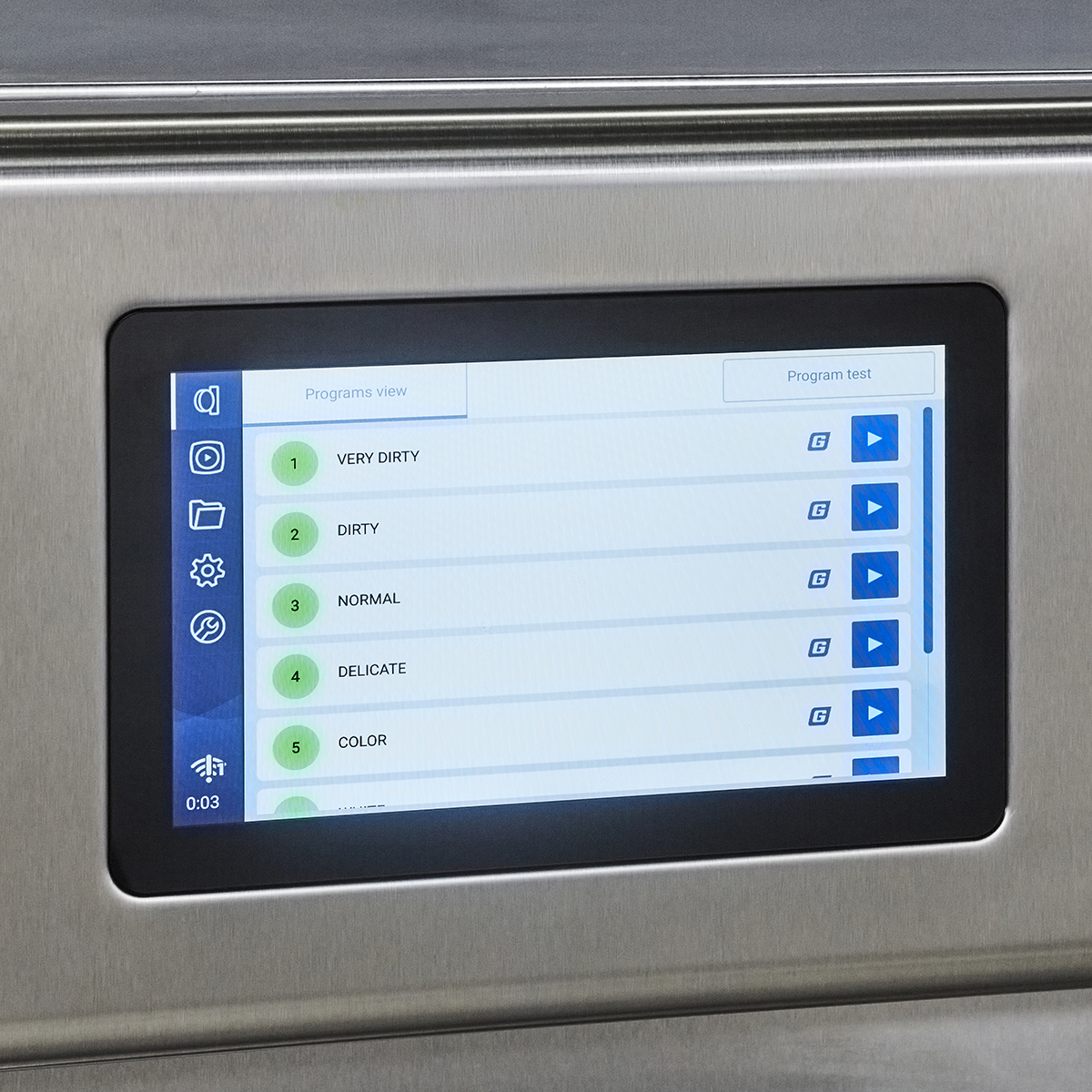
A washer’s programmability is also important. Some laundries only need a handful of programs for washing items, whereas a commercial laundry that processes a large variety of linens for customers — hospitality, healthcare, food and beverage, spa, salon, party rental, etc. — needs a large number of programs. Choose a washer that offers flexible programmability that fits the item types you’ll be washing. GS-Series Washers have the industry’s largest waterproof and impact-resistant 10-inch touchscreen/customer interface with 20 pre-set and 70 customizable programs.
Ease of Use
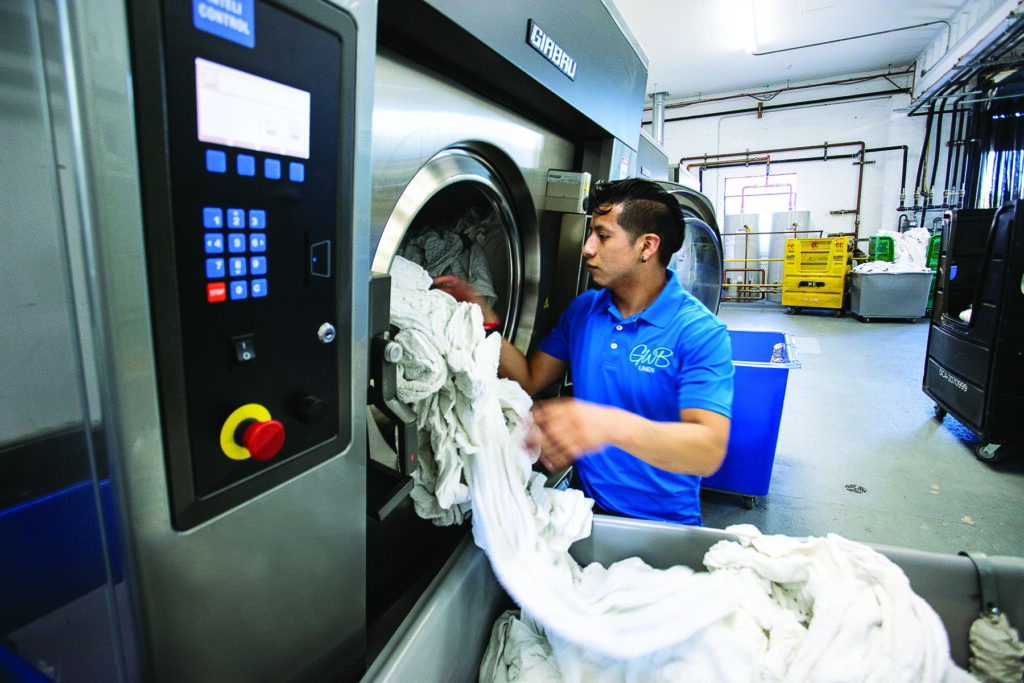
This brings us to ease of use. A washer’s ergonomics and ease of use matter. Good ergonomics keep operators safe and highly productive. Big washer doors simplify loading and unloading. Automatic chemical injection means operators don’t add detergents manually. Instead, chemicals are automatically injected into the load at the perfect moment in the cycle. This saves time and ensures a consistent clean without damaging fabrics. On large-capacity models consider automatic tilting. This assists operators in the loading unloading process. Finally look into a large touch-screen control and status lights. GS Washers have both. The 360° Corner Status lights illuminate in different colors to let operators know cycle status — making the machine easier to monitor.