Vended laundries have always played a vital role in neighborhoods across the country, but in my view, the operators who truly stand out are the ones who recognize they can be much more than a place to wash clothes. At their best, laundries can become community anchors — spaces that uplift, educate and support the very people who keep their businesses running. And increasingly, I’ve seen owners embrace that responsibility in ways that are both practical and powerful.
Read, Play and Learn
One of the most impactful examples is the growth of Read, Play and Learn (RPL) centers. Developed through a partnership between the LaundryCares Foundation and Too Small to Fail, these small but meaningful installations bring books and early learning tools directly into laundromats. The need is undeniable. In cities like Chicago, a significant portion of children struggle to meet reading standards and many families lacked even a single book at home. When you consider that early childhood is such a critical window for development, it’s clear that meeting families where they already are — like the public laundry — just makes sense.
Clean Rite Center in Bronx, N.Y., saw that opportunity and acted on it. Years ago, the laundry installed an RPL and launched family story time sessions and financial education programming. Many laundries are following suit across the U.S., with some even removing income-producing machines to do so. That’s not a small decision in a business built on turns


per day. But to these owners, the benefits extend well beyond the balance sheet. The centers keep children engaged, support literacy and strengthen customer loyalty. Books leaving the store in the hands of kids aren’t viewed as losses — they are wins.
Free Laundry and Literacy Days
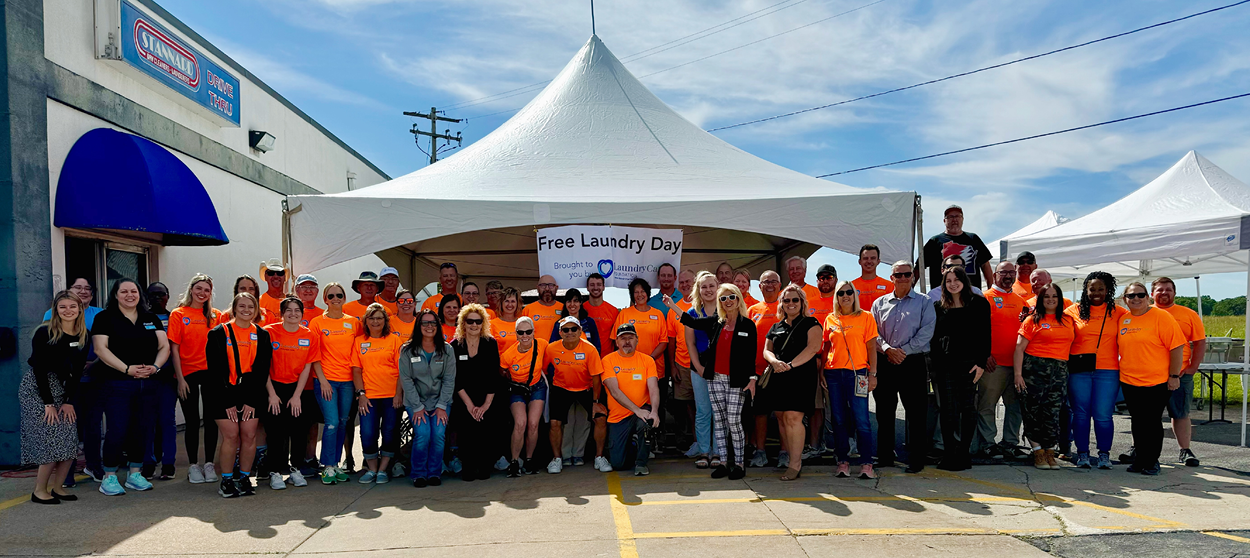
What I find especially compelling is how these literacy efforts often connect to larger outreach events. Free Laundry and Literacy Days, organized through the LaundryCares Foundation, are a great example. These aren’t small promotions; they are full-scale community events. Owners open their doors and offer free washing and drying, supported by volunteers and local partners. Families don’t come in just for clean clothes, but for a sense of community. There are meals, prizes and activities, and in many cases, these events mark the introduction of an RPL center to the store. For customers, it turns an everyday chore into something meaningful and for operators, it is a chance to show genuine appreciation for the people they serve.
Betterment Workshops/Presentations
I’ve also seen laundries expand their outreach beyond literacy. Years ago, the Laundry Café took a broader approach by focusing on health, financial literacy and access to technology. The store became a hub for workshops on credit repair, homeownership and disease awareness, tackling issues that directly impact underserved communities. Brian Holland, one of the owners, summed it up well when he said they couldn’t solve everything, but they believed information could change lives. I tend to agree. Sometimes, simply providing access — to knowledge, to tools, to opportunity — can shift someone’s trajectory.
That same philosophy showed up in other ways too. Family movie nights, free meals, incentives for students — these weren’t complicated ideas, but they were intentional. And intention matters. When customers feel seen and supported, it changes their relationship with a business.
Since then, more laundries have followed suit.


Partnerships
Charitable partnerships are another avenue where I believe laundries can make a real difference. Oshkosh Express Laundry Center supported the Aurora Health Care Foundation through its Pink Possible Breast Health Fund, contributing thousands of dollars to help cancer patients and their families. What stood out to me wasn’t just the donation total, it was the impact. When a customer walked in and personally thanked the staff after her own battle with cancer, it reinforced something important: these efforts resonate far beyond the business itself.
There are countless other ways laundries have stepped up, including coat drives, sponsorships, donations to organizations like St. Jude Children’s Research Hospital, even providing free services after natural disasters. None of these actions alone will change the world. But collectively, they do something just as important — they strengthen communities.
For a long time, this industry had a reputation for being purely transactional. I think that’s changing. More owners are realizing that success isn’t just measured in turns and revenue, but in relationships and impact. From where I sit, community outreach isn’t just a “nice to have” — it’s an essential part of what modern laundries should be. And the operators who embrace that mindset aren’t just improving their businesses — they’re helping redefine the industry altogether.
Meet the Author

Tyler Willman, Continental Laundry Solutions regional sales manager, works closely with vended laundry owners and distributors to provide laundry solutions and services recommendations to boost revenue, profits and customer satisfaction. Contact him at twillman@continental-laundry.com or call 800-256-1073.