A commercial laundry, like any other business, must make the most of its resources – labor, machinery, technology, water, natural gas and electricity – while at max productivity. This requires careful planning. And, when it’s done correctly, commercial laundries enjoy low overhead costs and high productivity and profit levels. So, if you’re planning your next commercial laundry, read on for tips on creating a super-efficient one.
When it comes to laundries, there are several ongoing costs, with labor leading the list. Labor costs make up 40-60 percent of total commercial laundry costs. Next are utility costs, making up 15-25 percent. Keeping these costs down is the key to profitability and efficiency. Check out the following tips:
Contact Your Continental Distributor Before Laundry Design
Your first step is to contact your Continental Laundry Solutions distributor. Your distributor will provide expert guidance and assistance with everything from equipment recommendations, laundry design and workflow, to financing, training and technical service after the sale. Your distributor will analyze your production, quality and labor needs and then provide you with quality solutions. Find your distributor here.
Select the Right Equipment
By selecting the right equipment, you can drastically conserve water, electricity and natural gas, decrease required labor hours and maximize laundry productivity. See our recommendations below…
Open-Pocket Washers: Continental and Girbau Industrial (GI) open-pocket soft-mount washers (20- to 255-pound capacities) are highly efficient with extract speeds reaching 450 G-force. The high extract removes more moisture from every load, which cuts drying time by up to 50 percent. This means dryers complete loads in half the time, using half the natural gas. The shortened wash/dry time maximizes throughput and allows operators to complete more loads in less time – saving labor.
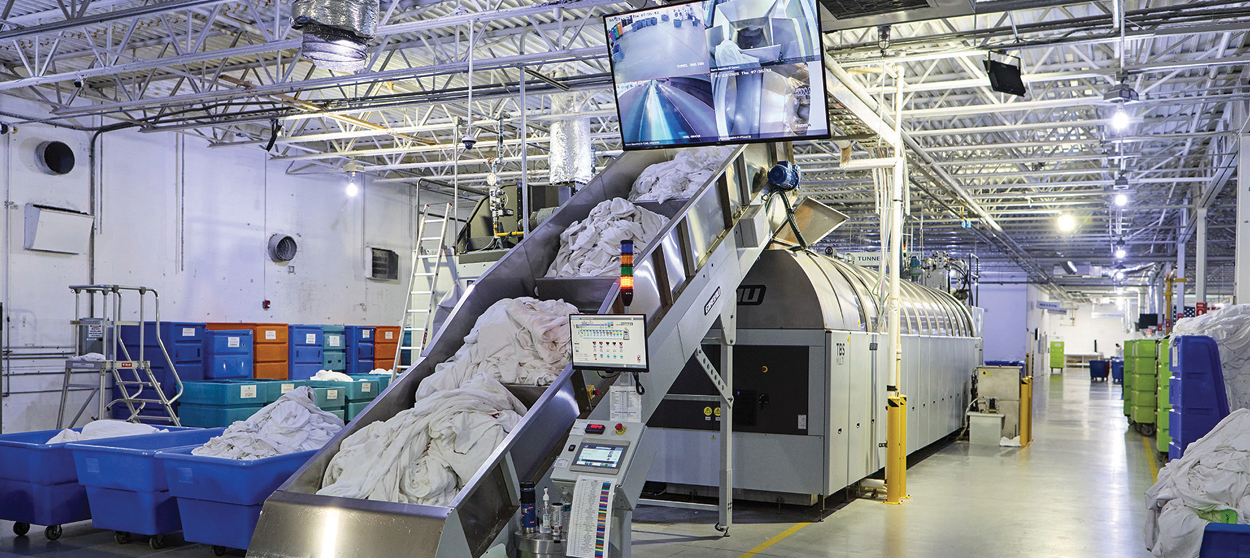
Tunnel Washers: When laundry volume exceeds 1,000 laundry pounds per hour, it’s time to look at a GI Continuous Batch Tunnel Washer for improved labor savings, efficiency and productivity.

With 5 to 14 modules, these tunnels offer double-drum flexibility and programmability by module. Plus, you can continue to modify them once they are installed for capabilities including water reuse, filtration, heat reclamation and ozone sanitization. Only one operator is required, which reduces labor costs. Water, natural gas and electricity consumption are also less when compared to open-pocket machines.
Dryers: Continental and GI Dryers are highly flexible and designed to contain heat and optimize air flow for unrivaled efficiency. Some models offer suction loading and the ability to work in concert with a tunnel washing system or as a stand-alone unit.
Ironing Systems, Feeders & Folders: GI finishing systems are designed to handle damp linens straight from the washer. As they pass through the ironer, they are dried and perfectly pressed at up to 90 percent efficiency. Feeders and folders improve throughput and reduce labor time.
At the end of the day, equipment selection, laundry design and workflow are the greatest contributors to laundry efficiency. Each one works to save labor hours, water, natural gas and electricity, while maximizing throughput.